

Sandpaper isn't the only way to prepare a woodworking project for finish. In fact, when you're dealing with figured grain, machine marks, or a large surface like a tabletop, a scraping tool can often get you to a smooth surface faster.
A traditional card scraper works well, but there's a drawback: You have to flex the scraper with your thumbs while maintaining the correct cutting angle. That's manageable for small jobs, but it can become tiring when you're smoothing a large surface.
A cabinet scraper or scraper plane puts the blade into a handled tool that does much of that work for you. You get the cutting action of a scraper with better control and considerably less hand fatigue.

Why Use a Scraper Instead of Sandpaper?
A sharp scraper doesn't abrade the surface the way sandpaper does. It cuts the wood, producing extremely thin shavings or scrapings.
That's especially useful when working with highly figured wood or grain that changes direction. These surfaces can be prone to tearout when they're passed through a planer or jointer or worked with some conventional cutting tools.
A scraper provides another way to refine the surface while maintaining a lot of control over the cut.
Scraping can also dramatically reduce the amount of sanding required before applying a finish.
Cabinet Scraper: Simple & Easy to Control
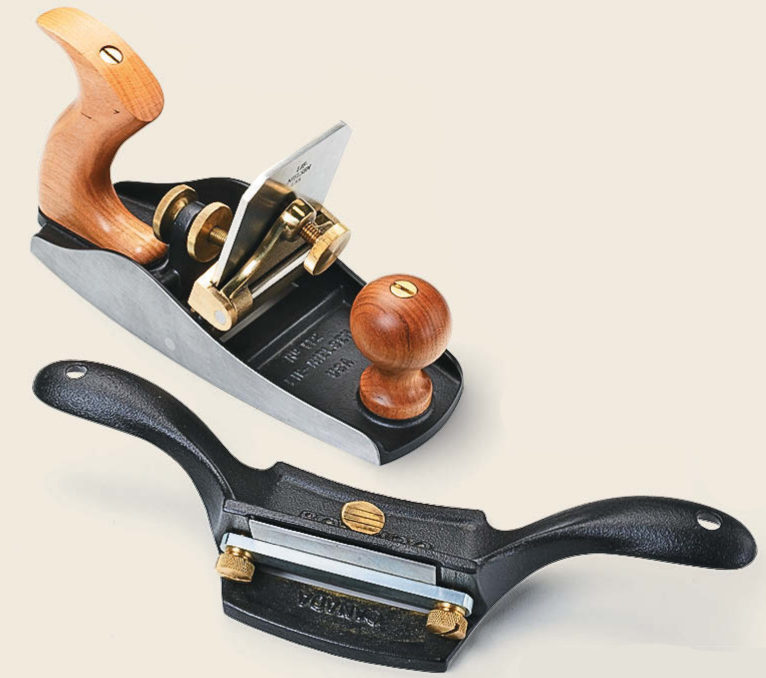
The cabinet scraper is the simpler of these two tools. A classic example is the Stanley No. 80.
At its heart, the tool is essentially a holder for a scraper blade. Two handles give you a comfortable grip, while a clamp holds the blade in position.
A thumbscrew presses against the blade to flex it slightly. Instead of maintaining that flex with your thumbs as you would with a card scraper, the tool does it for you.

The Flat Sole Makes a Difference
There's another important advantage over a handheld card scraper: a cabinet scraper has a sole.
That flat reference surface makes it easier to maintain a consistent cut and helps you keep the workpiece flat as you smooth it.
This makes a cabinet scraper particularly useful for removing localized machine marks and refining flat surfaces without accidentally creating dips or hollows.
The tradeoff is adjustability. The scraper blade is held at a fixed working angle. That's perfectly adequate for many jobs, but if you regularly work with difficult grain or large surfaces, a scraper plane provides more control.
Scraper Plane: More Control for Larger Surfaces
A scraper plane looks and feels much more like a conventional bench plane.
The large scraper plane shown here is based on the classic Stanley No. 112 design. Rather than a conventional plane iron, however, it carries a thick scraper blade.

The blade is nearly 3" wide, so it can cover a lot of surface quickly. The plane's mass, wide blade, flat sole, front knob, and rear tote also make it comfortable to guide across a large workpiece.
That's a useful combination when smoothing something like a tabletop.
Unlike the thin blade in a cabinet scraper, the thicker blade isn't flexed or bowed during use. It's clamped securely in position and the tool's setup determines the cut.
Cabinet Scraper vs. Scraper Plane

For occasional scraping, a cabinet scraper offers a lot of capability without much complexity. If you regularly smooth large surfaces or difficult figured woods, the extra adjustment and control of a scraper plane can be worthwhile.
Setting a Scraper Plane for a Fine Cut
The goal isn't to hog off large amounts of material. A scraper plane works best when it's taking a controlled, thin shaving.
One simple way to establish the cutting depth is to place the plane on a flat surface with a sheet of paper beneath the front of the sole. Loosen the blade, adjust it into position, and tighten the clamping screw.

This creates a very slight blade projection.
Start conservatively. You can always increase the cut once you see how the tool responds to the wood.
WOODSMITH TIP: A scraper should cut rather than simply rub across the surface. Look for fine shavings or scrapings. If you're creating lots of dust without making much progress, check the blade and setup.
Adjust the Blade Angle to Match the Wood
One of the most useful features of this style of scraper plane is its adjustable blade angle.
The blade can be positioned vertically or tilted forward. Changing that angle alters how aggressively the scraper engages the wood.
That gives you the ability to tune the plane for anything from removing machine marks to making delicate passes over highly figured grain.
About 15° Forward — General Smoothing

A blade tilted forward about 15° from vertical provides a useful general-purpose setting.
It produces short, paper-thin shavings and works well for cleaning up machine marks on relatively straight-grained stock.
More Forward Tilt — A More Aggressive Cut

Tilting the blade farther forward produces a deeper, more aggressive cut.
The result can be longer curls rather than fine scrapings. This setup is useful when you need to do more than simply refine the surface — for example, smoothing irregularities in a glued-up tabletop.
Vertical — Fine Work on Figured Grain

Setting the blade vertically reduces the aggressiveness of the cut.
Instead of long shavings, you'll typically get very fine scrapings. This makes the setting useful for smoothing highly figured or difficult grain where a more aggressive cutting tool could cause tearout.
Scraping Before Sanding
Using a scraper doesn't necessarily mean you'll never touch sandpaper. Think of scraping as a way to do the heavy surface refinement before sanding.
A cabinet scraper or scraper plane can remove:
- Planer and jointer marks
- Minor surface irregularities
- Glue-line inconsistencies
- Rough areas around reversing or figured grain
Once those problems are gone, any final sanding becomes much easier. Rather than trying to sand defects out of the surface, you're simply refining an already smooth surface in preparation for finish.
A Different Route to a Smooth Surface
There's a satisfying simplicity to smoothing wood with a sharp scraping tool. There's little dust, you can see the surface change as you work, and you maintain direct control over how much material is removed.
For smaller jobs, a card scraper may be all you need. Step up to a cabinet scraper and you gain a flat sole and comfortable handles. Move to a scraper plane and you add more mass, a wider blade, and the ability to adjust the cutting angle for different woods and surfaces.
They're old-school hand tools, but when you're staring at a large tabletop or a piece of highly figured wood that doesn't want to cooperate, they can save a surprising amount of time at the sander.
Build Your Hand-Tool Skills
Scrapers are just one way to work wood by hand. From planes and chisels to saws, rasps, files, and sharpening tools, learning how these traditional tools work can give you more control over shaping, joinery, and surface preparation.
EXPLORE MORE HAND TOOLS → Essential Hand Tools for Woodworking: A Beginner’s Guide