


Build a Better Jointer Push Block from Scrap Wood
A jointer is one of the first tools I turn to when preparing lumber for a woodworking project. But getting smooth, straight results depends on maintaining good control of the workpiece while keeping your hands away from the cutterhead.
That's why I take jointer push blocks seriously.
A good push block should provide a comfortable grip, apply steady pressure, and keep your hands away from the cutting area. And with a little thought, you can build one that's especially well suited to your jointer.
This DIY jointer push block is made from a few scraps of plywood, a hardwood dowel, and a piece of hardboard. Its two-handle design, offset grip, and rear cleat make it a useful addition to the shop.
What Makes This Jointer Push Block Different?
The design is simple, but several features make it especially handy when jointing boards.
The thick plywood body provides a sturdy base, while two handles allow you to guide the workpiece with both hands.
A hardboard cleat at the back engages the trailing edge of the board, helping apply forward pressure as the workpiece moves across the jointer.
The front dowel handle provides an additional gripping point for stability and control.
And there's one more detail that's easy to overlook: The rear handle is slightly offset.
This gives your knuckles additional clearance from the jointer fence, particularly when working with narrower boards.

Build the Push Block Body from Plywood Scraps
I started by making the body from five strips of plywood glued together.
The laminated construction creates a thick, sturdy block without requiring a large piece of hardwood.
Before assembling the handles, I cut an angle on the front corner of the body.
This angled corner provides clearance as the push block approaches the jointer's spring-loaded cutterhead guard, allowing the guard to operate as intended.
The body also provides a solid foundation for attaching the handles and rear cleat.
Add Two Handles for Better Control
The rear handle is shaped for a comfortable grip.
I cut it to shape at the band saw, sanded the curves smooth, and rounded over the edges before gluing it into the plywood body.
Rather than positioning the handle directly in the center, I offset it slightly to provide more clearance between my hand and the jointer fence.
A Dowel Makes a Simple Front Handle
The front handle is even easier to make.
It's simply a dowel installed in a hole drilled into the body.
I rounded over the top of the dowel for comfort before gluing it in place.
Together, the two handles make it easier to maintain control of the push block while guiding a board across the jointer.

Install the Hardboard Push Cleat
The final component is a hardboard cleat attached to the back of the push block.
This cleat catches the trailing end of the workpiece, allowing the push block to help move the board forward.
I rounded the upper corners of the cleat and attached it with screws.
Using screws makes the cleat easy to replace if it becomes worn or damaged.
The cleat should engage the workpiece securely without interfering with the jointer's fence, guard, or cutterhead.
A Handy Addition to Your Jointer
This shop-made push block doesn't require much material or time to build, but the thoughtful details make it useful.
The laminated plywood body provides a sturdy foundation. The two handles offer comfortable gripping points. The offset rear handle improves fence clearance, and the hardboard cleat helps maintain forward pressure.
It's a simple woodworking shop project that turns a few scraps into an accessory you'll reach for regularly.
Safety Note: Always follow your jointer manufacturer's instructions for push-block use. Keep the cutterhead guard functioning properly, use suitable stock dimensions, and maintain control of the workpiece throughout the cut. A push block improves hand separation but doesn't eliminate the risk of kickback or cutterhead contact.
5 Shop-Made Push Blocks for Table Saws, Routers & More
A good jointer push block is just one of several useful safety accessories you can make for your workshop.
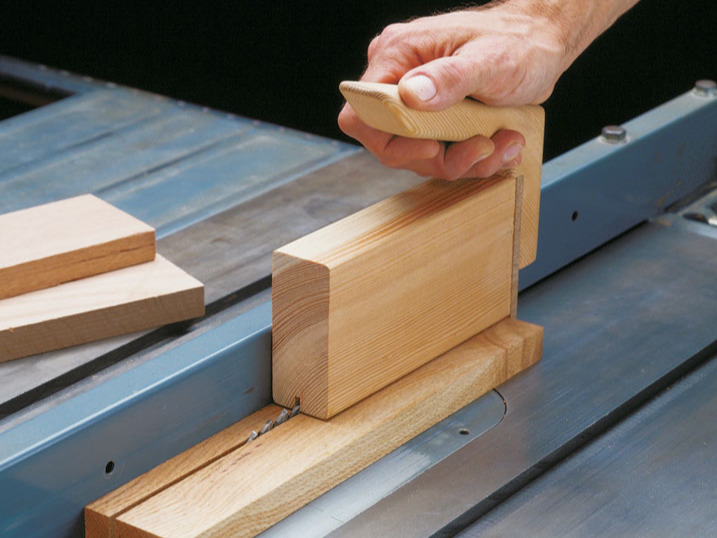
Discover five shop-made push blocks designed for table saws, router tables, band saws, and jointers. Each design offers practical features to help guide workpieces and keep your hands farther from blades and cutters.
EXPLORE SHOP-MADE PUSH BLOCKS → More Push Blocks for Better Workpiece Control


