

You don't always need a purpose-built accessory to solve a problem in the shop. A plastic drawer liner can protect your bench during glue-ups, a cardboard tube can keep push sticks handy, and a piece of cord organizer can protect your arms while changing a table saw blade.
In this collection of Woodsmith Quick Tips, four readers share simple ideas for keeping their workspaces cleaner, their tools accessible, and their mobile workbenches easier to use.
1. Use a Plastic Drawer Liner as a Reusable Glue-Up Mat

Glue squeeze-out is a normal part of assembling woodworking projects, but cleaning dried glue from a benchtop can be a nuisance. A protective mat keeps the mess contained and makes cleanup easier.
Hermie Tolerba of Sugar Land, Texas, discovered that inexpensive plastic drawer liners from discount stores make handy glue-up mats.
The slick plastic surface resists glue adhesion, so dried glue is easier to remove. The liner also provides a barrier between the workpiece and the benchtop.
When the glue-up is finished, Hermie can roll up the mat and tuck it away until the next project.
It's an inexpensive alternative to a dedicated assembly mat, and it can be cut to fit different work areas.
Woodsmith Tip: Choose a smooth, nonporous liner and test it with the adhesive you're using. Make sure the mat lies flat and doesn't allow your workpiece or clamps to slide during assembly.
Shop tip submitted by Hermie Tolerba, Sugar Land, Texas.
2. Make a Table Saw Push Stick Holder from a Cardboard Tube

A push stick is an essential accessory for many table saw operations, but it's only useful when you can find it.
Lou LaFrate of Vail, Arizona, was tired of searching around his shop for push sticks whenever he needed one. His solution was to give them a dedicated storage spot right on the saw.
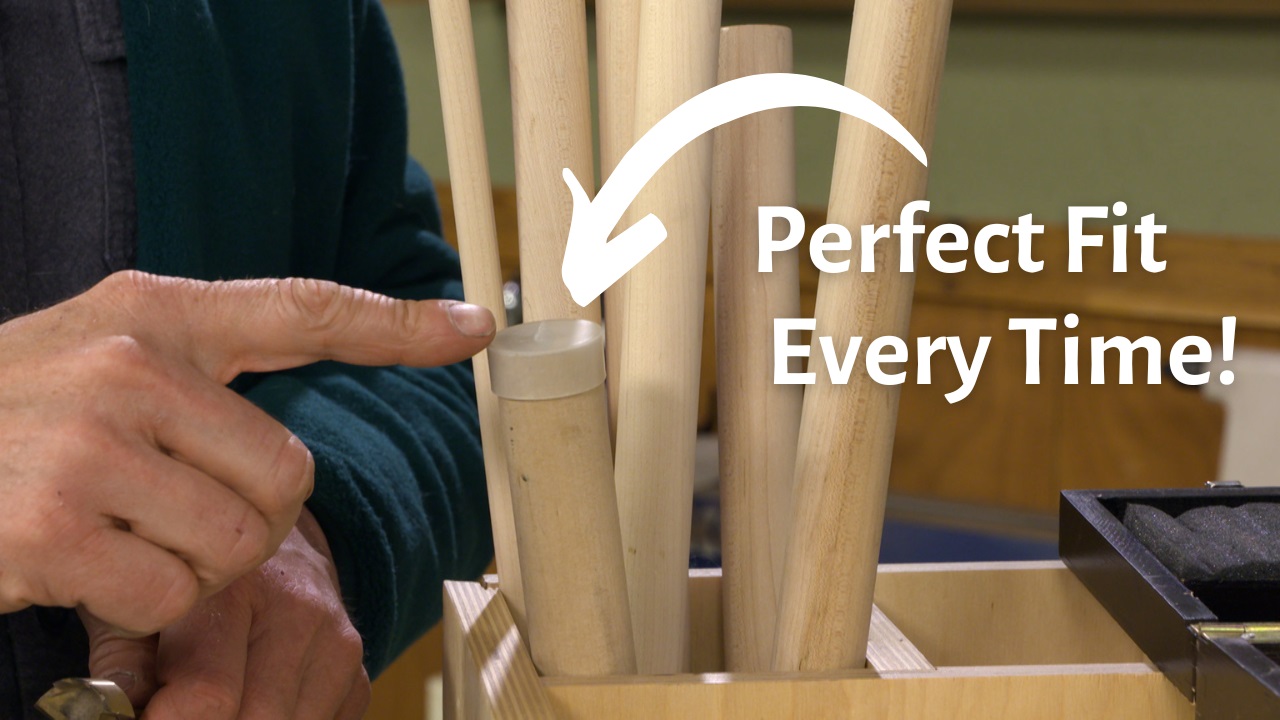
Lou attached a cardboard tube to the side of his table saw, creating a simple scabbard for his push sticks.
Now they're easy to see, easy to reach, and less likely to get misplaced between cuts.
Woodsmith Tip: Mount the holder where it won't interfere with the saw's controls, moving parts, or your stance while cutting. Keep a push stick within reach, but don't reach for it while a cut is in progress.
Shop tip submitted by Lou LaFrate, Vail, Arizona.
3. Protect Your Arms When Changing a Table Saw Blade

Changing a table saw blade often means reaching into a tight space to loosen the arbor nut. Even when the saw is unplugged, the exposed blade teeth can scratch or cut your hands and forearms.
William Aulick of Cincinnati, Ohio, found a simple way to cover those sharp teeth.
He uses a length of split cord organizer tubing—the type commonly used to bundle electrical cords. Before reaching inside the saw to loosen the arbor nut, he wraps the tubing around the blade's exposed teeth.
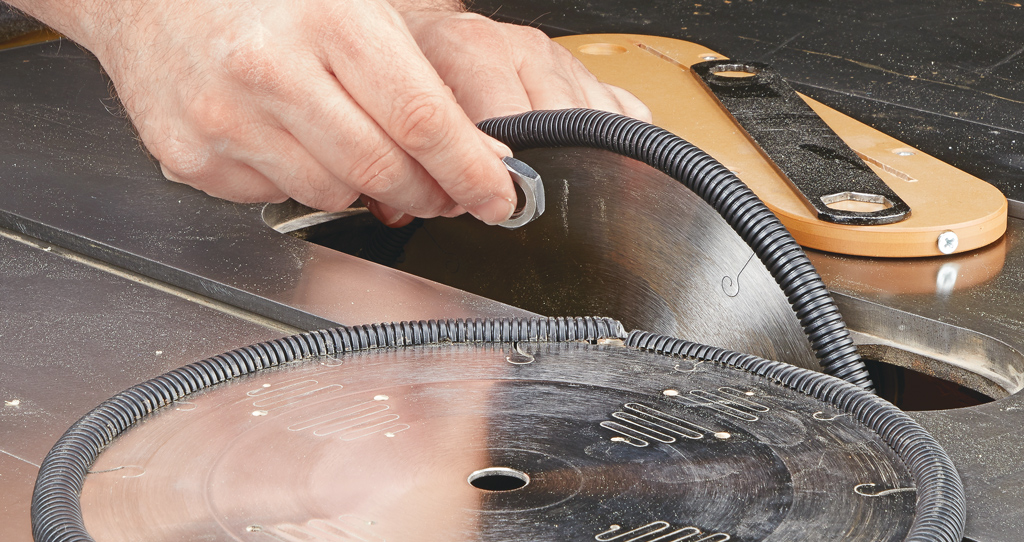
The tubing creates a protective barrier between his arm and the blade, making the blade change more comfortable.
It's a handy second use for a common workshop accessory.
Woodsmith Tip: Disconnect the table saw from power before changing the blade. Use the proper arbor wrenches and follow the saw manufacturer's blade-change procedure. The tubing is supplemental protection, not a substitute for careful handling. Remove it completely before operating the saw.
Shop tip submitted by William Aulick, Cincinnati, Ohio.
4. Link Workbench Caster Levers to Raise Both Wheels Together

Retractable casters are a convenient way to make a heavy workbench mobile. When the casters are lowered, you can roll the bench to a new location. When they're raised, the bench rests on its legs for stability.
But operating one caster at a time can create a problem.
Dana Myers of Des Moines, Iowa, found that raising one corner of his workbench before the other caused the bench to twist.
His solution was to connect the caster lift levers with a bar.

Now, when Dana operates the connected levers, both wheels engage at the same time. This helps the bench rise more evenly instead of lifting one corner at a time.
It's a useful modification for a workbench equipped with compatible lift-style casters.
Woodsmith Tip: Make sure the connector bar doesn't bind the caster mechanisms and that both casters engage fully. Check the caster manufacturer's load ratings and mounting instructions, and keep your feet clear when lowering the bench.
Shop tip submitted by Dana Myers, Des Moines, Iowa.
Simple Shop Upgrades That Make a Difference
These four reader-submitted tips show how inexpensive materials can improve familiar woodworking tasks. A drawer liner protects your bench from glue, a cardboard tube keeps push sticks close to the table saw, split tubing covers sharp blade teeth during changes, and a connector bar helps lift a mobile workbench evenly.
They're straightforward ideas that can make your shop cleaner, more convenient, and easier to work in.