

One of the hallmarks of a fine furniture finish is a surface that's perfectly smooth to the touch and reflects light evenly.
Getting that appearance can be challenging on open-grain woods. Even after careful sanding and several coats of finish, the pores can remain visible as small depressions in the surface. The finish may feel smooth but still have a noticeable texture when light reflects across it. The solution is to fill the pores before building the final finish.
Traditional paste-type pore fillers work well, but matching the filler color to the surrounding wood can sometimes be difficult. A mismatched filler can leave the grain looking unnatural. Clear epoxy offers another approach.
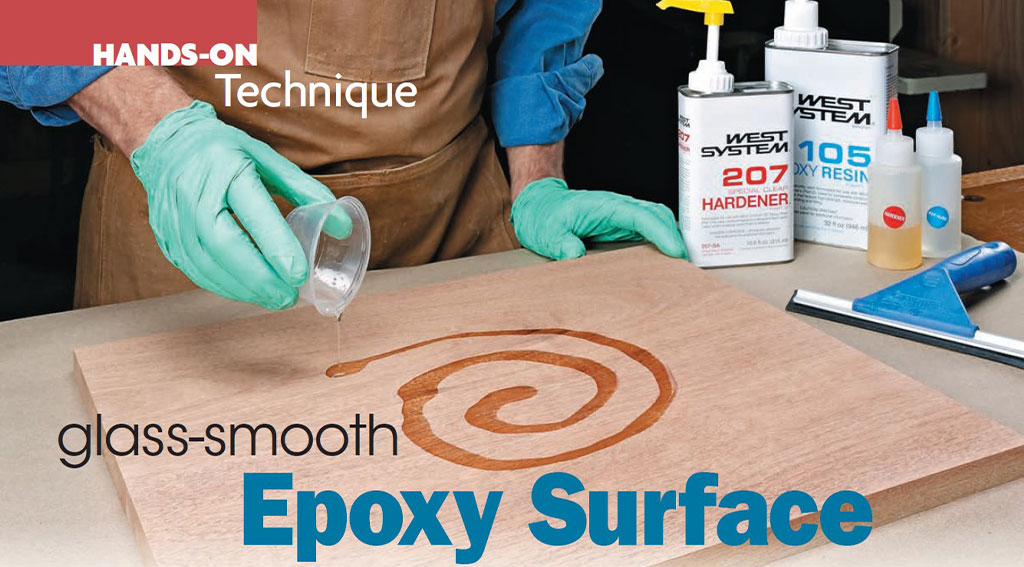
A thin application of clear epoxy fills the pores without introducing a contrasting filler color. Once the surface is leveled and sanded, you can apply a compatible topcoat to create the final appearance.
Epoxy also creates a useful moisture barrier beneath the finish.
What Does Epoxy Do to the Wood?
The difference is easiest to see by comparing the surfaces before and after filling the pores.
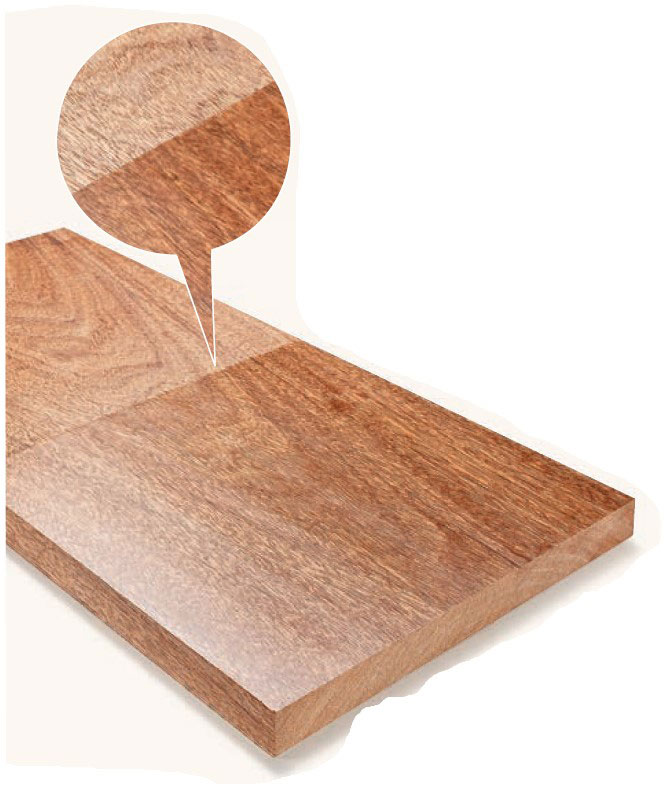
The goal isn't to build up a thick layer of epoxy like you might on a bar top or resin-coated tabletop.
Instead, you're using epoxy as a clear pore filler.
The epoxy is spread across the surface and worked into the open pores. Most of the excess is removed with a squeegee, leaving behind a very thin coat.
After curing, the surface is sanded and the process is repeated until the pores are filled. The result is a level foundation for the final topcoat.
Prepare the Wood for Epoxy
As with most finishing techniques, a good result starts with careful surface preparation. The epoxy needs to form a mechanical bond with the wood. Sand the surface to no finer than 120-grit, adjusting as appropriate for the wood you're using.
Remove the sanding dust before moving on to the epoxy.
Prepare Oily Woods
Oily woods such as cocobolo and rosewood need some additional preparation.
Before applying the epoxy, wipe the surface with acetone or lacquer thinner to remove surface oil that could interfere with adhesion.
Allow the solvent to evaporate before proceeding with the epoxy.
Pay Attention to Wood and Shop Temperature
Temperature is an easy detail to overlook, but it can have a noticeable effect on the finished surface. Allow the wood to acclimate to the temperature of the shop before applying epoxy.
Once you've spread the epoxy, avoid substantially increasing the shop temperature while the epoxy is curing.
Why?
As the wood warms, air within it can expand and escape through the surface. This out-gassing can create bubbles or pinholes in the epoxy.
Starting with acclimated wood and avoiding a large temperature increase during the cure helps reduce the chance of bubbles appearing in the surface.
Woodsmith Tip: Watch the Temperature. Don't bring a cold project into a warm shop and immediately coat it with epoxy. Give the wood time to acclimate before you begin.
Mix a Small Batch of Clear Epoxy
You don't need much epoxy for this technique. The goal is to fill the pores rather than create a thick coating, so a surprisingly small batch can cover a fairly large area.
For this process, I use West System epoxy with 207 Special Clear Hardener.
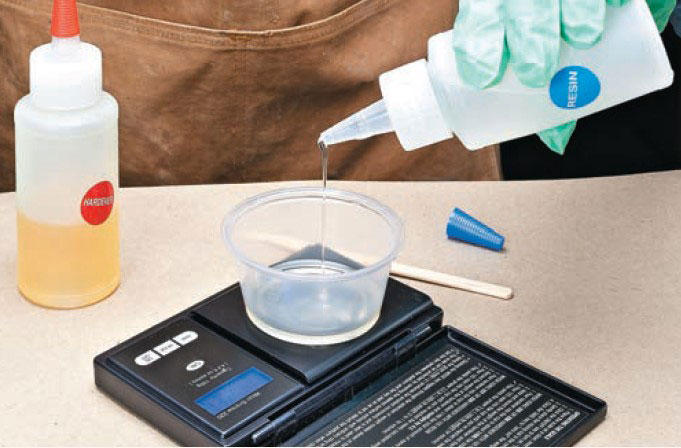
Because only a small amount is required, a scale makes it easy to measure small batches by weight. Measure the resin and hardener according to the epoxy manufacturer's specified mixing ratio and combine them thoroughly.
Once mixed, you'll have a limited working time. With the epoxy used here, plan on roughly 20 minutes to cover the surface before the mixture begins to harden.
Don't mix more than you can comfortably apply within that window.
Spread Epoxy Across the Grain
Pour a small amount of mixed epoxy near the center of the workpiece.
Then use a rubber squeegee to spread it across the surface at approximately a 45° angle to the grain.
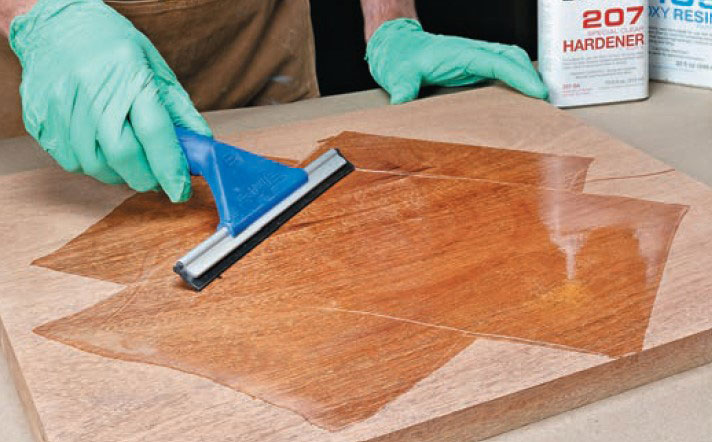
Begin with light pressure so you can distribute the epoxy over the entire surface.
Once everything is covered, increase the pressure on the squeegee. The goal is to force epoxy into the open pores while removing most of the material sitting on top of the wood.
Clean excess epoxy from the squeegee with a rag as you work. What remains should be a very thin coat, with the epoxy concentrated in the pores rather than built up heavily over the surface.
Let the Epoxy Cure, Then Sand
Allow the first coat to cure. With this finishing schedule, the first coat is allowed to dry for about 10 hours before sanding.
Then lightly sand the surface with 320-grit sandpaper.
You're leveling the surface and preparing it for another application rather than aggressively sanding away the epoxy that has filled the pores.
Apply Additional Coats Until the Pores Are Filled
One application may not completely fill deep, open grain. Apply additional thin coats using the same procedure: Spread → Squeegee → Cure → Sand
Continue until the pores are completely filled and the surface is uniformly smooth.
The mahogany shown here required two coats of epoxy.
The number of applications on another project will depend on the wood and the depth of its pores.
Prepare the Epoxy for the Final Finish
Once the pores are filled and the epoxy is smooth, use an ultra-fine abrasive pad over the entire surface.
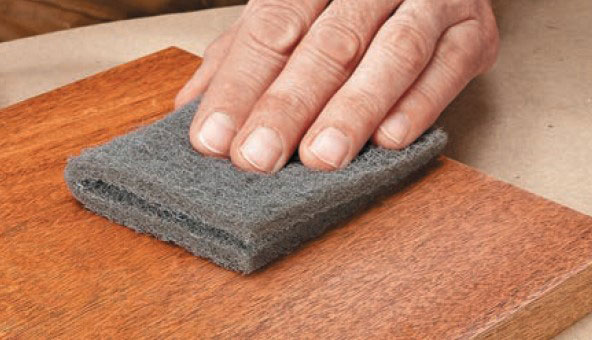
At this stage, the epoxy has done its job. It has filled and leveled the open pores, creating a smooth foundation for the finish that follows.
You can then apply varnish or another compatible topcoat to produce the final sheen and protection.
Woodsmith Tip: Epoxy Isn't the Final Finish. For this technique, think of the epoxy as part of the surface preparation, not necessarily the final furniture finish. Its job is to fill the grain and establish a level surface. The topcoat determines the final sheen and appearance.
Why Use Epoxy Instead of Traditional Pore Filler?
The main advantage of clear epoxy is that it doesn't require you to match the color of a traditional paste filler to the wood.
That's particularly useful when the goal is to showcase the natural appearance of the grain.
Epoxy also provides a durable moisture barrier beneath the final finish.
But the real payoff becomes apparent when light hits the completed project. Instead of reflecting from a surface broken up by open pores, the light reflects evenly from a smooth, level finish.
For furniture where you want that glass-smooth, highly refined appearance, filling the pores with clear epoxy can make a dramatic difference.
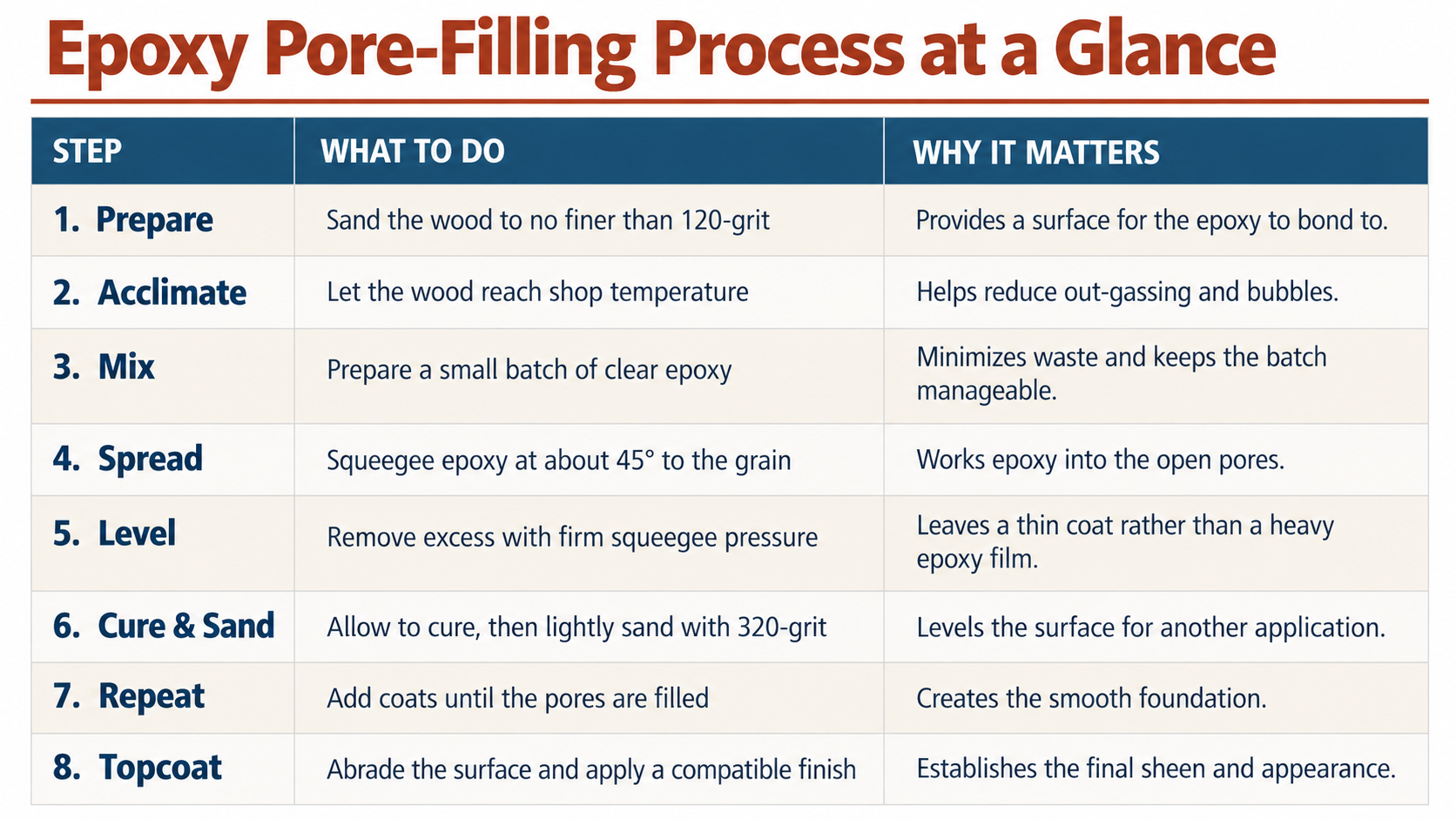
Epoxy Pore-Filling Process at a Glance
Not Sure Which Topcoat to Use?
Once the epoxy has created a smooth foundation, you'll still need to decide what finish should go over it. Durability, appearance, application method, and how the project will be used all play a role.
EXPLORE WOOD FINISH OPTIONS → How to Choose the Right Finish for Any Project