


How to Bend Solid Wood Using a Band Saw
Bending solid wood doesn't always require steam, special forms, or thin laminations. With a band saw and a series of carefully spaced cuts, you can transform a rigid board into a flexible workpiece that bends into a curve. This clever variation of kerf bending is surprisingly straightforward and opens up some interesting possibilities for woodworking projects.
A Different Approach to Kerf Bending
Traditional kerf bending involves cutting a series of closely spaced slots into one face of a board. These cuts remove enough material to allow the wood to bend, usually with the kerfs facing the inside of the curve.
But there's another approach that produces a different result.
Instead of making all the cuts from one side, you can make alternating cuts from opposite edges of a board. The result is a series of thin, interconnected strips that allow the wood to flex.
We used this technique to create the distinctive round shade for our Modern Desk Lamp, featured in Woodsmith Magazine Issue 236.
At first glance, the shade looks like it's assembled from dozens of individual wooden strips. In reality, each half starts as a single solid wood blank.

Preparing the Wood for Bending
Before heading to the band saw, there's some important preparation to take care of.
The lampshade starts with two solid wood blanks cut to their final dimensions. Each blank receives a dado near both ends. These dadoes will eventually hold the wooden rings that give the finished shade its circular shape.
Next, rabbets are cut along opposite faces of the blanks. A few chamfers at the router table ease the edges and complete the preparation.
With the joinery finished, it's time to make the cuts that transform the rigid wood into a flexible workpiece.
Making Alternating Kerf Cuts at the Band Saw
The secret to this woodworking technique is a series of stopped cuts made from alternating ends of the board.
Start by marking the stop lines near each end of the blank. These lines establish where each cut ends, leaving enough material to connect the thin strips.
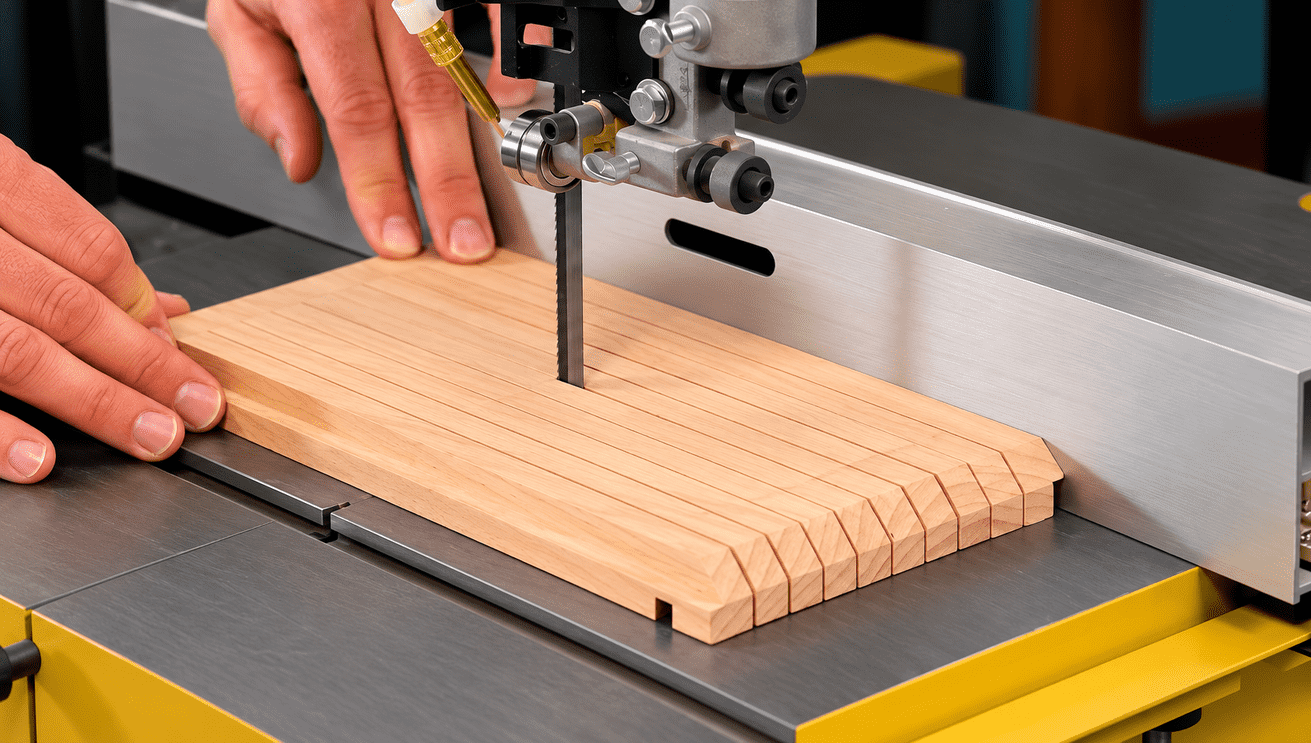
Using the band saw's rip fence as a guide, make the first cut up to the layout line. Then withdraw the workpiece, flip it over, and make a matching cut from the opposite edge.
By repositioning the fence and repeating the process, you'll create a series of evenly spaced cuts across the width of the blank.
Next, repeat the process from the opposite end, positioning the new cuts between the first series.
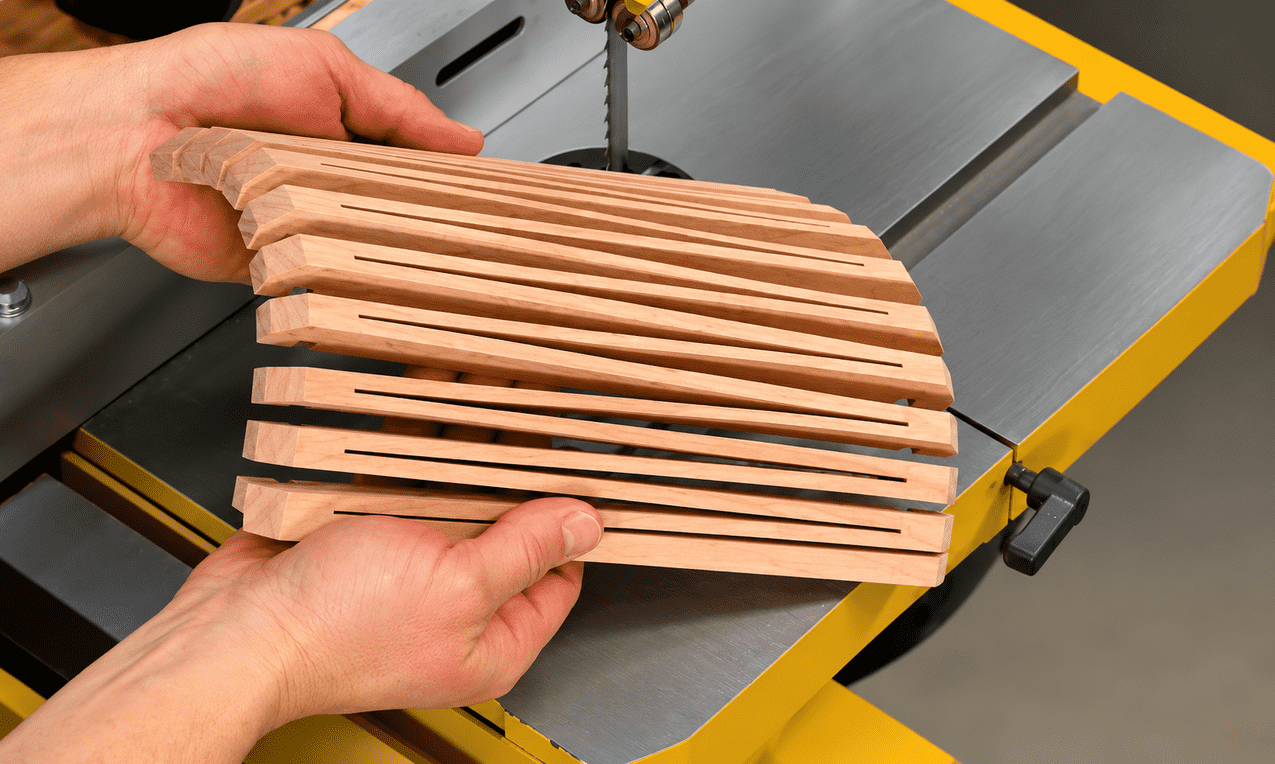
As the cuts progress, you'll notice the board becoming increasingly flexible. What started as a rigid piece of solid wood gradually takes on an accordion-like structure that can bend into a curve.
Tips for Accurate Band Saw Cuts
Accuracy is important when making these cuts. Keeping the workpiece against the rip fence helps maintain consistent spacing, but avoid forcing the wood sideways against the blade.
As the blank becomes more flexible, the thin sections can deflect slightly. You may need to make small steering adjustments to keep each cut centered between the neighboring kerfs.
Use a sharp, properly tensioned blade, keep your hands clear of the cutting path, and use suitable workholding or push devices as needed. Never force the increasingly flexible blank through the blade.
The goal is to leave consistent strips of wood connected at alternating ends without cutting through the material that holds everything together.
Turning Flexible Wood into a Curved Lampshade
Once all the cuts are complete, the transformation is remarkable. The once-rigid board can now flex into a curved shape.
For our Modern Desk Lamp, two of these flexible blanks form the circular wooden shade. The wooden rings fit into the dadoes cut earlier, establishing the final shape.
The finished shade has a distinctive louvered appearance, with evenly spaced wooden strips wrapping around the lamp.
It's a striking example of how a simple woodworking technique can create a design that looks much more complicated than it actually is.
Build the Modern Desk Lamp
Want to put this band saw bending technique to work in your own shop?
Our Modern Desk Lamp is a great small woodworking project that combines an unusual solid wood lampshade with a clean, contemporary design.
The step-by-step woodworking plans walk you through preparing the blanks, cutting the joinery, creating the flexible shade, and assembling the finished lamp.
GET THE STEP-BY-STEP PLANS: Build a Modern Desk Lamp
Whether you're looking for a unique woodworking project or simply want to explore new ways to shape wood, this band saw technique is worth adding to your collection of shop skills.


