

Mitered corners give small wooden boxes a clean, seamless appearance, especially when the grain wraps around the sides. But a plain miter joint has a drawback: The end-grain connection offers limited glue strength, making the corners vulnerable to separating over time.
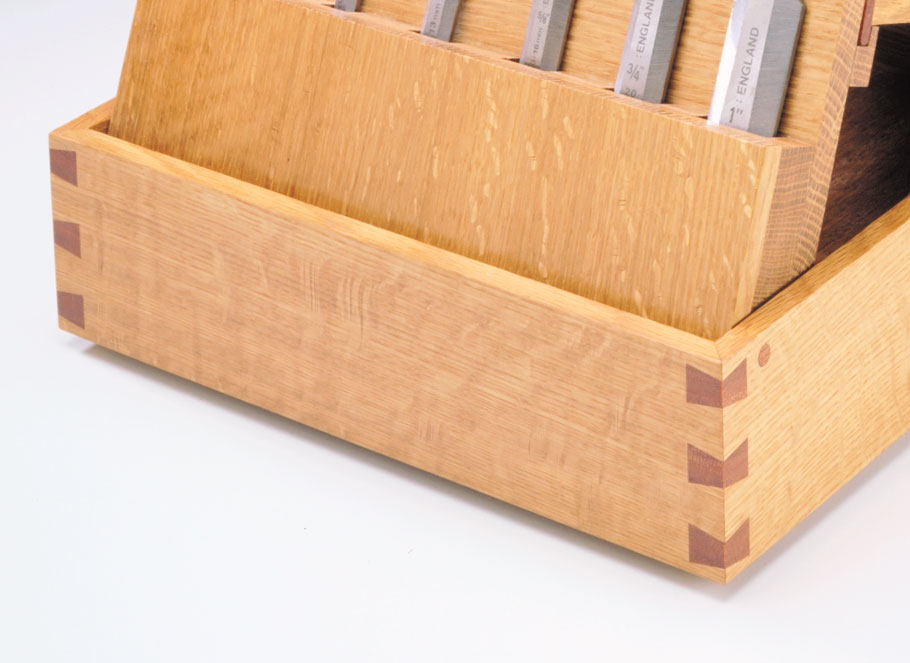
One of my favorite ways to reinforce a mitered box is with decorative dovetail splines, sometimes called dovetail keys. These small inserts bridge the joint, adding mechanical strength while creating an attractive detail at each corner. Using a contrasting wood for the keys can make them an especially striking feature.
To make the process easier, I built a simple router jig that lets me cut matching dovetail slots with a handheld router and dovetail bit. The jig registers against the corner of an assembled box and supports the router throughout the cut, making it easy to produce consistent results.
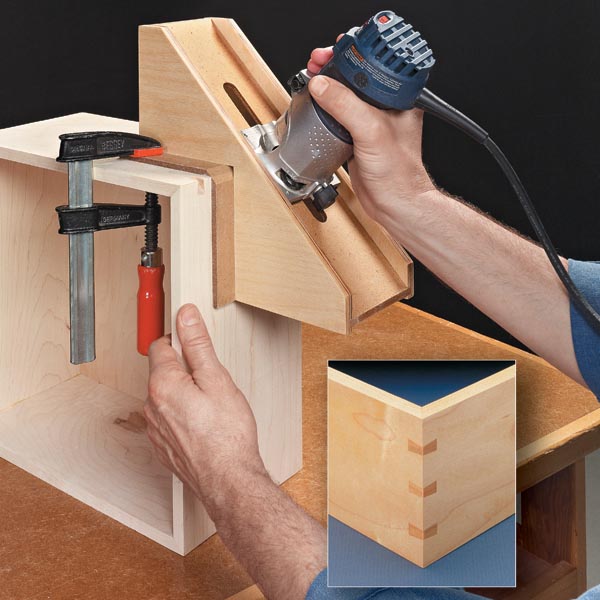
How the Dovetail Spline Router Jig Works
The jig consists of two plywood sides, a hardboard router table, and a two-piece base that fits over the corner of the box. The table supports the router while the sides guide its movement, keeping the dovetail bit aligned as it cuts across the miter.
To use the jig, clamp it securely over the corner of the assembled box. Position the router on the hardboard table with the bit aligned at the top of the slot. Then hold the router firmly and slide it along the table to make the cut.
The jig provides a stable reference surface, allowing you to rout matching slots at the corners of the box. Once the slots are complete, you can fit and glue in the decorative dovetail keys.
Building the Dovetail Spline Jig
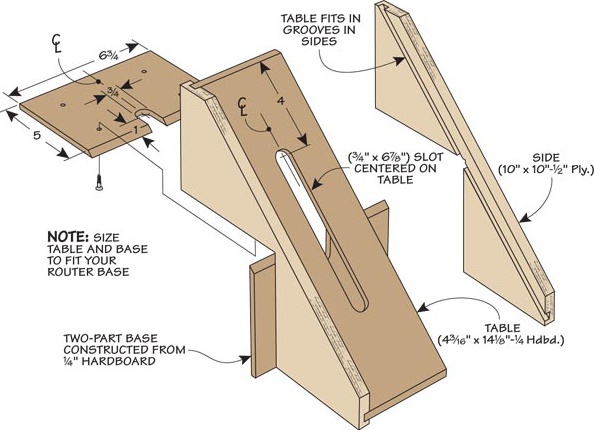
The jig starts with two identically shaped sides made from 1/2" plywood. Each side has a square notch cut into it, while the edge opposite the notch is beveled at 45°. A groove along the inside face of each beveled edge holds the hardboard table that supports the router.
The table is made from 1/4" hardboard and should be sized to fit the router base snugly between the two plywood sides. You want a smooth sliding fit without excessive side-to-side movement, which could affect the accuracy of the slots.
A centered slot in the hardboard table provides clearance for the dovetail bit as it passes through the jig and into the box corner.
Adding the Base and Corner Supports
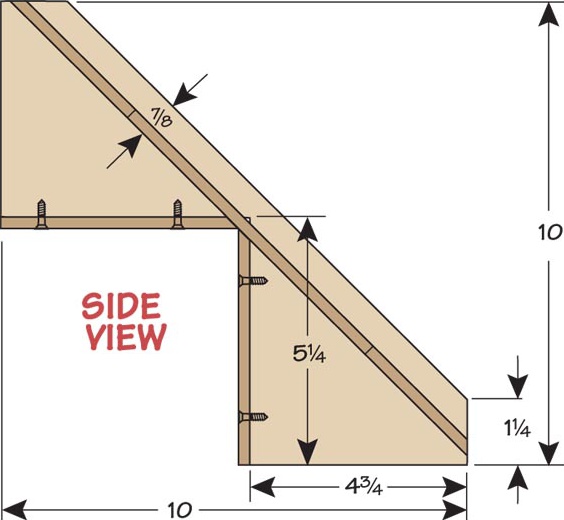
The base consists of two pieces attached on opposite sides of the notch. These pieces register against the adjoining faces of the mitered box, positioning the jig over the corner to be routed.
I made the base extra wide to provide room for clamps. This allows the jig to be secured firmly to the box without interfering with the router's travel.
Take care when assembling the jig to keep the sides aligned and the router table properly seated in its grooves. The router should slide smoothly along the table, and the base should sit securely against the box corner.
Cutting Dovetail Slots in a Mitered Box
Before routing the finished project, make a few test cuts in scrap material. This lets you confirm the bit depth, check the fit of the dovetail keys, and get comfortable with the router's movement.
With the jig clamped in position, set the router on the hardboard table and align the bit with the starting end of the slot. Hold the router firmly against the table as you move it through the cut. Keep the router base supported throughout the operation, and avoid forcing the bit through the material.
Because the dovetail bit cuts a wider profile below the surface, take care when entering and exiting the cut. Follow the bit manufacturer's recommendations for cutting depth and remove excess waste with an appropriate preliminary cut if needed.
Repeat the process at the remaining corners, keeping the jig orientation and bit settings consistent so the slots match.
Once the slots are complete, make the dovetail keys to fit, glue them in place, and trim them flush after the glue dries. A contrasting wood can highlight the joinery, while a matching species gives the box a more understated appearance.
A Simple Way to Strengthen Mitered Box Joints
Decorative dovetail splines are a great way to add both strength and character to a mitered box. The keys reinforce the corner mechanically while turning an otherwise simple joint into a distinctive design feature.
With this shop-made router jig, you can cut the slots consistently using a handheld router. It's a useful addition to the shop if you enjoy making keepsake boxes, small cabinets, or other projects with mitered corners.
RELATED PROJECT: CHISEL CASE WITH DOVETAILED KEYS