


A CNC router is an incredibly versatile tool. Most woodworkers think of it as a machine for cutting plywood, hardwood, signs, and joinery, but with the right tooling and techniques, it can do much more.
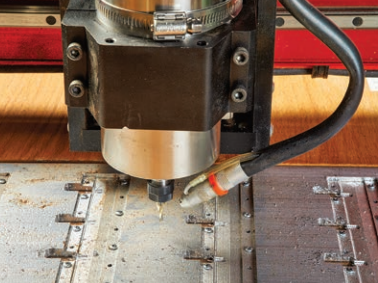
In this episode of CNC Basecamp, Chris Fitch explores how to machine brass and aluminum with a CNC router. Cutting metal on a home-shop CNC machine requires a different approach than cutting wood, but once you understand the basics, it opens the door to a wide range of new projects.
Brass and aluminum can be used for custom hardware, brackets, decorative accents, jigs, signs, project parts, and even tools. The key is choosing machinable alloys, using the right bits, controlling heat, and clearing chips efficiently.
Choosing the Right Metal
Not every metal is a good candidate for a home-shop CNC router. The goal is to select alloys that are readily available, affordable, and easy to machine.
For aluminum, 6061 aluminum is a great choice. It’s strong, corrosion resistant, easy to find, and machines well with the proper setup.
For brass, 360 brass is an excellent option. Sometimes called free-machining brass, it’s formulated to cut cleanly and efficiently. It produces manageable chips and puts less stress on tooling than many other brass alloys.
Choose the Right CNC Bit
The cutter has a major impact on both cut quality and tool life.
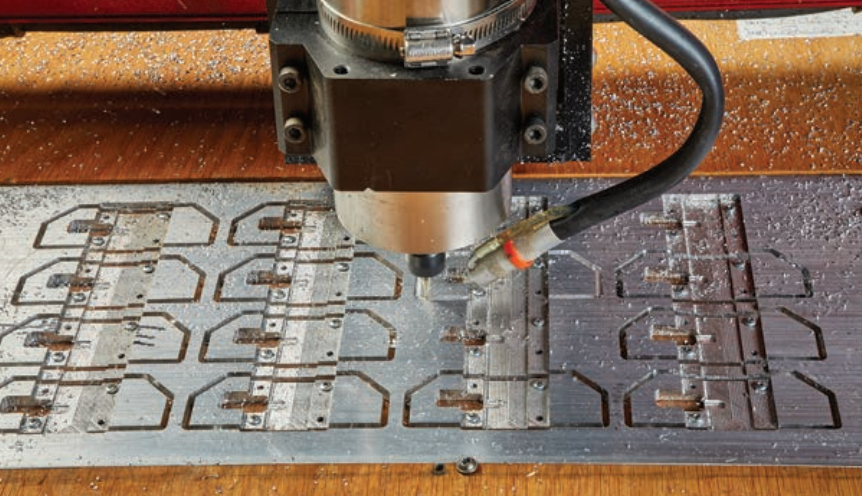
For brass and aluminum, a small-diameter spiral upcut end mill works well because it reduces cutting forces and helps evacuate chips. A short cutter is also more rigid, which reduces chatter and deflection.
For aluminum, a polished single-flute cutter is a good choice because aluminum can be gummy and prone to sticking to the cutting edge.
For 360 brass, a two-flute cutter works well because the material machines cleanly and the additional cutting edge improves efficiency and stability.
Keeping the cutting length as short as practical also helps increase rigidity and improve accuracy.
Dial In Feeds and Speeds
Metal requires a more disciplined approach to feeds and speeds than wood.
Home-shop CNC routers generally aren’t as rigid as industrial metalworking machines, so pushing them too aggressively can lead to chatter, poor cuts, or broken bits.
At the same time, running too slowly can cause the cutter to rub instead of cut. That generates excess heat and shortens tool life.
A good starting point is to use a moderate feed rate and spindle speed, then adjust based on your specific machine, cutter, and material.
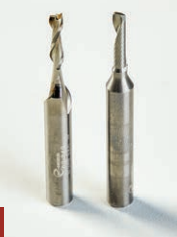
Chris has found that around 50 inches per minute at 19,500 rpm works well in many home-shop situations.
The important thing is to listen to the machine, watch the chips, and avoid assuming that slower is always safer.
Take Light Cuts
Depth of cut is another important factor when milling metal with a CNC router.
For 6061 aluminum, Chris has found that a depth of cut around .03" per pass works well.
For 360 brass, a slightly deeper cut of around .05" per pass is often practical.
These may seem like shallow passes compared to woodworking, but light cuts reduce stress on the machine, limit cutter deflection, and help produce cleaner results.
Patience pays off when machining metal.
Keep the Cutter Cool
Heat is one of the biggest enemies when machining brass or aluminum.
The cutter is constantly balancing between cutting and rubbing, and that friction generates heat quickly. Too much heat can shorten bit life and reduce cut quality.
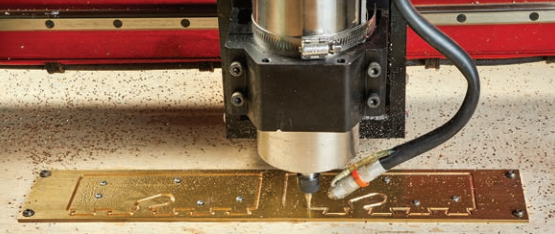
Lubrication helps reduce friction and keep the cutter cool.
For thin material, a wax-style lubricant can work well. For deeper or multi-pass cuts, spray-on cutting oil is a simple solution.
An oil mister is another option. It uses compressed air to deliver a small, steady stream of lubricant directly to the cutter.
The goal isn’t to flood the workpiece. It’s simply to provide enough lubrication to keep the cutter cool and cutting efficiently.

Clear the Chips
Chip buildup can ruin an otherwise good cut.
When metal chips stay in the kerf, the cutter can recut them. That increases heat, creates more stress, and can lead to broken tooling.
Compressed air works well for clearing chips, though it should be used carefully. Metal chips can easily be blown into electronics or toward the operator, so eye protection is essential.
A dust collector can also help, but metal chips are heavier than sawdust. In some cases, a custom dust boot or tighter airflow around the cutter can improve collection.
Why Machine Metal on a CNC Router?
Once you get comfortable working with brass and aluminum, your CNC router becomes much more versatile.
You can create custom brackets, decorative trim, project hardware, signs, inlays, fixtures, jigs, and other components that would otherwise require dedicated metalworking equipment.
The techniques are not complicated, but they do require a little more attention to tooling, lubrication, chip clearing, and cutting parameters.
With the right setup, a home-shop CNC router can machine brass and aluminum accurately and consistently.